• Thermography for Life

    Breast Thermography is applicable to all women, especially the group between 40 and 50, and for those who have dense, fibrocystic breasts or implants. It is a completely safe, non-invasive screening method that has been proven to be effective. An abnormal infrared image is the single-most important marker of high risk for developing breast disease.

    Thermography for Life
  • What is Thermography

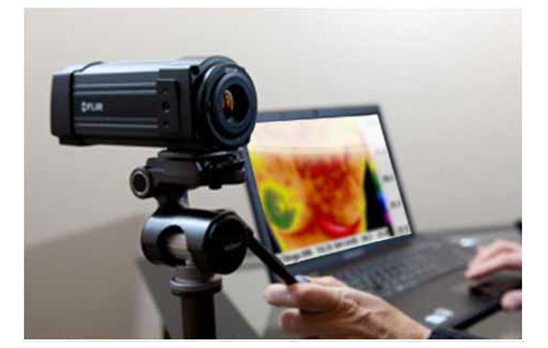
    Thermography measures the infrared radiation (heat) which is constantly radiating (emitting) away from the surface of the human skin. Skin as an organ breathes, exchanges gases with the environment, cools us as well as keeps us warm by letting heat out...

    What is Thermography
  • Why Breast Thermography

    With all the attention focused on treating breast cancer lately, it is perplexing that many do not recognize the great gains to be made by addressing breast cancer prevention.

    Why Breast Thermography

Non Invasive

Risk Assessment:

Safe & Proven

Testimonials

My doctor is fully supportive of thermography

Years ago I heard about breast thermography but was reluctant to do it because my doctor did not approve of it. I have fibrocystic breast disease and I’m being screened with mammography every 6 months. I decided to give thermography a try and have never regretted it since. Thermography provides me with an early warning system that I use it to monitor my breast health. There is no radiation or painful compression of my breasts and it gives me information that no other test can. I get my annual exams with thermography now.
I do not need to radiate my breasts every 6 months any more and my doctor is fully supportive of thermography now.

Mary Andrioni
Woodbridge, ON

Women who are proactive about their health to do it!

I never heard of breast thermography until my friend mentioned it to me. I was very skeptical but decided to do it anyway. What an incredible experience. No radiation or squishing of my breast and everything they told me was right on the mark. I’m so grateful to my friend who recommended this to me. I advise all women who are proactive about their health to do it.

Bonnie Reynolds
Toronto, ON

Social Media Posts

Thermography Clinic Inc.

Thermography Clinic Inc.

1,506

With many clinics across North and South America we are a leading medical thermography provider.

Thanks to Paradigm Thermography for the post!💔🌀 When Trauma Blocks the FlowHow Emotional Wounds Create Physical Stagnation in Your Lymphatic System(This article is for informational purposes only and is not a substitute for professional medical advice, diagnosis, or treatment. Always consult your healthcare provider before making changes to your health regimen.)“Our biography becomes our biology.” — Dr. Gabor MatéWhat if your swollen nodes, chronic puffiness, or lymphatic congestion aren’t just physical...What if they are echoes of unspoken pain?The truth is, trauma doesn’t just live in your memory. It embeds itself in the tissues of your body — tightening fascia, freezing breath, gripping muscles, and quietly clogging your lymphatic system.This is the science of emotional stagnation — and the healing potential that’s unlocked when your lymph starts to flow again.🧠💧 The Forgotten Link: Emotions + LymphYour lymphatic system is the silent river of your body — it carries toxins, waste, immune cells, and inflammatory messengers. But it doesn’t have a heart to pump it.Instead, it relies on movement, breath, relaxed fascia, and neurological safety to flow.And this is where trauma steps in.When the body is trapped in a chronic fight-flight-freeze state — whether from abuse, grief, surgery, illness, or stress — your nervous system stays alert. Shoulders rise. The breath shallows. The diaphragm stiffens. Fascia contracts.And the lymph slows.🔒 Fascia: Where Trauma HidesYour fascia — the connective tissue that wraps every muscle, organ, and lymphatic vessel — holds somatic memory. Emotional trauma causes fascial rigidity, particularly in: • The neck & jaw (where the vagus nerve and deep cervical nodes sit) • The gut (where trauma often somatizes and lymph collects) • The pelvis (home to lymphatic cisterns and stored grief/violation)Research in biotensegrity and somatic release confirms that emotional experiences change fascial tone, impeding fluid flow and lymphatic movement【Scarr, G. Biotensegrity】.🧬 The Vagus Nerve & Lymph FlowYour vagus nerve is the body’s brake pedal. When it’s toned and calm, your body feels safe — digestion flows, breath deepens, and lymphatic rhythm returns.But trauma often leads to vagal shutdown or overload, impairing: • Gut-lymph circulation • Neuro-lymphatic drainage in the brain • Immune balance and inflammationThat’s why so many trauma survivors develop autoimmunity, swelling, or chronic fatigue.😭 When You Cry, You DrainThis may sound poetic, but it’s physiologically true:When you weep, sigh, exhale deeply, or shake, you’re moving lymph.Emotional release techniques — like somatic therapy, breathwork, craniosacral therapy, and MLD — often trigger “emotional detox” symptoms. This isn’t a setback. It’s a sacred reset.🌿 What Can You Do to Heal?Healing trauma-driven lymph stagnation is about more than drainage. It’s about creating safety in your nervous system so your body can finally let go.💆‍♀️ Therapeutic Tools: • Manual Lymphatic Drainage (MLD): Gently moves fluid & rewires safety into touch • Fascial Release & Craniosacral Therapy: Frees old holding patterns in the body • Vagus Nerve Stimulation: Cold exposure, humming, gargling, breathwork • Castor Oil Packs: Anti-inflammatory, grounding, and somatically soothing • Somatic Therapy: Releases stored trauma through body awareness and movement • Gentle Movement & Emotional Expression: Dancing, weeping, sighing, praying🧘🏻‍♀️ Real Healing Happens When...The body feels safe enough to surrender.The fascia softens.The breath deepens.The lymph begins to flow.And the soul finally exhales.This isn’t just lymphatic therapy.This is sacred restoration of a body that’s been carrying too much for too long.📚 Supporting Research: • Van der Kolk B. The Body Keeps the Score — trauma’s impact on physiology and memory • Scarr G. “Biotensegrity and the Fascia System” • Carter J, et al. Brain Behav Immun. 2016 — trauma, inflammation, and immune dysregulationdoi.org/10.1016/j.bbi.2016.10.019©️ ... See MoreSee Less
View on Facebook
Is Soy Really Bad for Breast Health?Soy often gets a bad reputation because it contains phytoestrogens, leading many people to believe it raises estrogen and increases breast cancer risk.However, the science shows something different.Soy isoflavones are very weak plant estrogens that can actually help modulate estrogen activity in the body rather than increase it.Interestingly, populations in Japan and China, where diets traditionally include foods like tofu, tempeh, and miso soup, have historically had lower breast cancer rates compared to Western countries.Research supports this:• A meta-analysis of 21 studies found higher soy intake was associated with about a 25% lower risk of breast cancer (Wu et al., Journal of Nutrition).--> pubmed.ncbi.nlm.nih.gov/17330506/• Studies in Chinese women found the highest soy intake linked to significantly reduced breast cancer risk (Zhang et al.). --> pubmed.ncbi.nlm.nih.gov/22393950/• Reviews of Japanese population studies also suggest protective effects of soy consumption (Nagata et al.). --> pubmed.ncbi.nlm.nih.gov/24453272/What we may want to be more mindful of in Western diets is excess estrogen production, which can be influenced by factors such as body fat, processed foods, and conventionally raised meats that may contain hormone residues.The takeaway: Traditional whole soy foods — tofu, miso, tempeh, and edamame — appear safe and may even be protective when consumed as part of a balanced diet.Breast health is less about fearing one food and more about supporting a healthy internal environment. ... See MoreSee Less
View on Facebook
Thanks to Thermography Clinic Ireland for the post!What is Thermal Breast Imaging? Breast cancer is scary business. Adding thermal imaging to standard screening can provide peace of mind. Not only can thermal imaging help in the detection process but it can identify signs of inflammation and blood vessel activity that can represent risk for developing cancer in the future. With this knowledge, actions can be taken to lower risk while using thermal imaging as feedback to help assess effectiveness. The feeling of helplessness is replaced with the feeling of empowerment. ... See MoreSee Less
View on Facebook
Milk Thistle, Hormones & Breast Health 🌿When we talk about breast health, we have to talk about the liver.Your liver plays a key role in breaking down and clearing excess hormones — especially estrogen. If detox pathways are sluggish, hormones can recirculate instead of being properly eliminated. Over time, that imbalance may contribute to symptoms like:• PMS• Breast tenderness• Heavy periods• Fibrocystic changes• Estrogen dominance patternsThis is where milk thistle (Silybum marianum) can be supportive.Milk thistle contains silymarin, a powerful antioxidant compound that:• Protects liver cells from oxidative stress• Supports healthy detox pathways• Helps reduce inflammation• Encourages gentle liver repairBy supporting liver function, we indirectly support hormone balance — and balanced hormones are foundational for healthy breast tissue.Detox doesn’t mean harsh cleanses. It means nourishing the organs that already detox 24/7 and reducing the body’s burden.Of course, milk thistle isn’t a magic pill. Breast health is multifactorial — stress, blood sugar, gut health, movement, and nutrition all matter.But supporting the liver can be a powerful piece of the bigger picture 🌿Always speak with a qualified practitioner before starting supplements, especially if you’re on medication or managing a health condition. ... See MoreSee Less
View on Facebook
Scroll to Top